
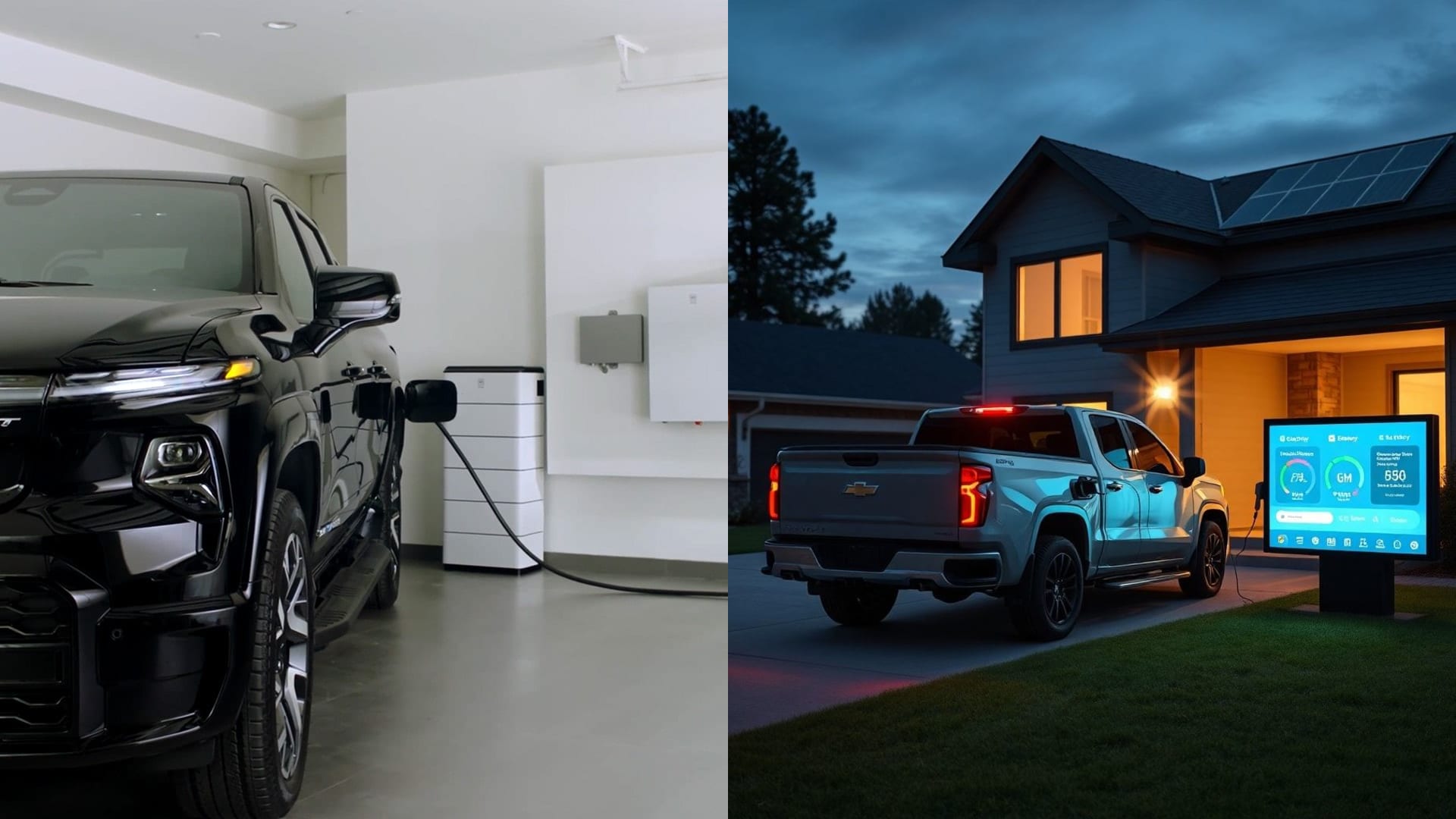


GM leads V2H in the US with 246k EVs in 2025 and launches leasing to make the feature more accessible.
Neste artigo
GM leads V2H in the US and expands access with leasing
Although seen as a brand of the past, GM is at the forefront of the Vehicle-to-Home, or V2H, market in the US. In 2025 the company sold 246,000 EVs with V2H capability and is preparing a leasing plan to make this technology more accessible to consumers.
Who dominates the scene and what has changed
The concept of bidirectional charging is seen as useful, but not all manufacturers have adopted it. Tesla has been slow to implement V2H, keeping the focus on V2L in some models, and only a few vehicles allow for home power supply functions. Even so, legacy automakers have advanced in the segment, including Ford and GM.
Even with the Cybertruck facing adoption hurdles and Ford pulling the F-150 Lightning, GM has extended bidirectional charging capabilities across its entire EV lineup, from the GMC Hummer EV to the Chevrolet Bolt.
GM Energy and the leasing plan
In 2025, GM became the second-largest EV seller by volume in the US, behind only Tesla, with 246,000 vehicles equipped with V2H. When associated with the GM Energy home energy management system, this setup can provide power during emergencies or peak hours. However, the installation cost is not low, which led GM to seek a leasing model to facilitate adoption.
The leasing program intends to cover GM Energy home energy management systems and PowerBank batteries. The idea is to distribute payments monthly to make V2H more accessible, but official details have not yet been released, with promises of more complete information closer to the launch.
How it works and what it means for daily life
V2H allows an EV to power a home during emergencies or peak demand, depending on battery capacity and the home's needs. According to the GM Energy website, a Silverado EV can keep a home powered for up to 21 days during a blackout, based on an average daily consumption of 5.3 kWh. The EIA, in turn, estimates the average daily consumption of homes in the US at about 30 kWh. The technology can also be integrated with systems that have solar panels, further increasing sustainability.
This approach can help save lives in emergency situations and help reduce energy bills by managing stored energy use, especially during peak hours.
What is your reaction to GM's bet on V2H? Would you consider V2H leasing for your home? Leave your comment below answering what interests you most about this feature and how it could impact your daily life.
Alert: Dongfeng Box gains six airbags without price increase; what changes for buyers?

Toyota bZ sales soar in the US in Q1 2026, surpassing the Chevy Equinox EV

Ioniq 5 defies expectations: sales up 14% in Q1 2026

GM maintains lead in US sales in Q1, with March boosting recovery

IONIQ 5 boosts Hyundai's record March and points to a stronger Q1

Forester Wilderness Hybrid: vegan interior, 12.3-inch digital dashboard, and orange trim