


Discover if generators can recharge an EV, with real-world cases, charging times, and Level 2 charging options.
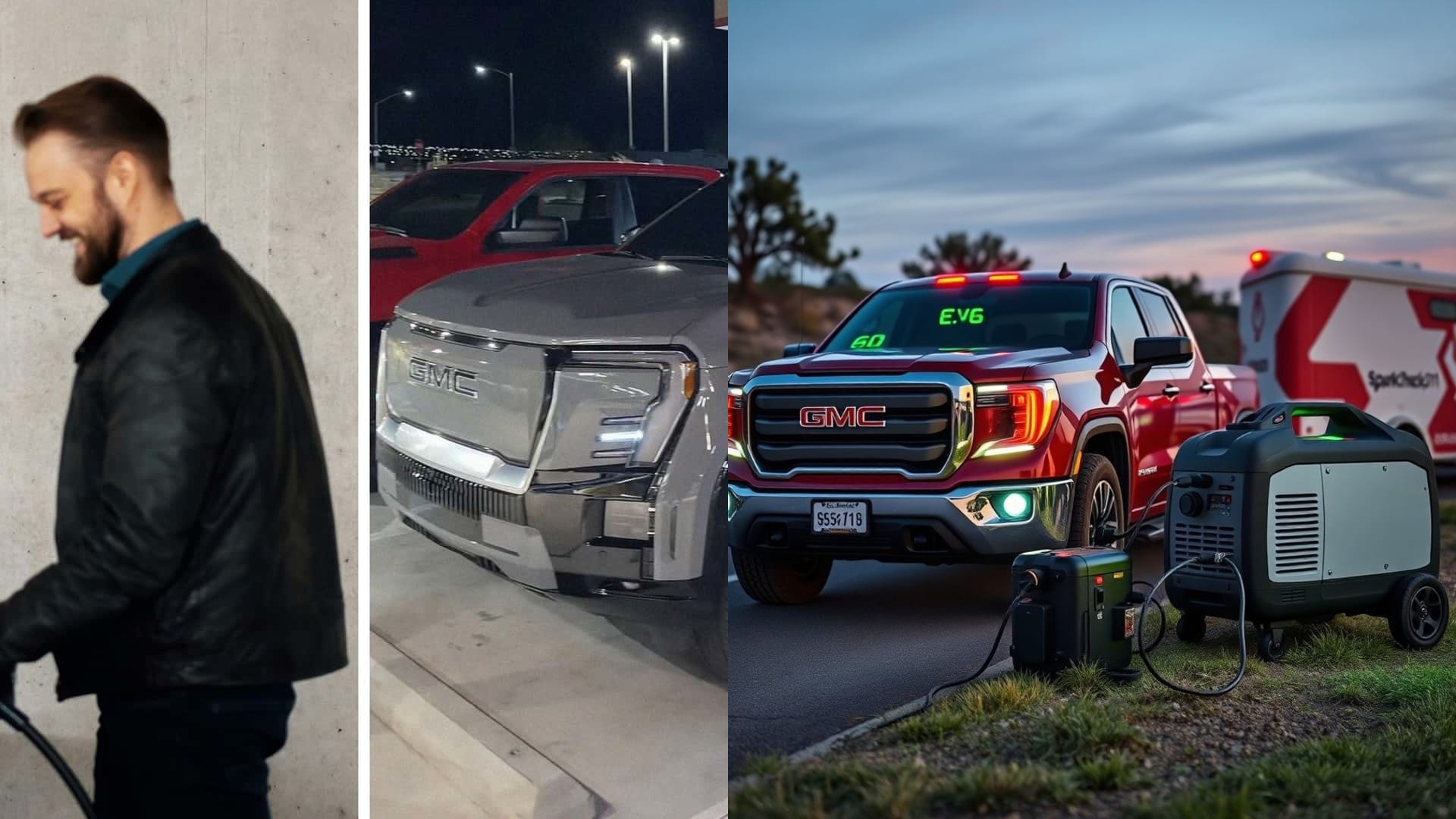
Every electric vehicle driver has felt that chill down the spine upon realizing the battery is running low and there is no charging station nearby. An owner of a GMC Sierra EV surprised many by seeking a creative solution: recharging using a generator. The video, published by the roadside assistance team Sparkcheck911, shows the Sierra receiving power even from an unlikely source: a generator, with a green light blinking on the dashboard indicating that charging is occurring.
Neste artigo
Is it possible to use generators to recharge an EV?
The content from Sparkcheck911 has shown several cases of stranded vehicles, one of which involves a Kia Niro with only 1% charge. To go from 10% to 80% with DC fast charging, the screen indicates about 45 minutes; to reach 100%, the chart indicates 8 hours and 50 minutes connected to the generator.
A Kia dealer informs that the Niro has a 64.8 kWh battery. According to them, it would take about two and a half days to fully charge on a residential 120 V outlet, whereas going from 10% to 80% on a DC fast charger requires approximately 45 minutes.
How much charging speed can a generator offer?
Performance depends on the available power. Generators with only three-prong adapters usually offer very slow recharging for EVs. There are higher-power options that provide Level 2 charging, and some are capable of dedicated ports, such as the 240 V NEMA 14-50 port, which facilitates this faster type of charge — although not as fast as a supercharger.
Some systems already sell rigs with Level 2 chargers. One model, the Apex, runs on gasoline or propane and delivers up to 11.5 kW. Although it doesn't match supercar charging speeds, it is a useful solution for getting back on the road after running out of energy.
For a practical reference, an enthusiast connected a 2023 Ford F-150 Lightning to a Predator 3500 generator, using only the standard 120 V port with the cable supplied by the vehicle. Starting from 50% battery, it is estimated that it would take about 36 hours to reach 80%. It is worth mentioning that larger batteries will require even more time in this scenario.
What does this mean for those without access to a charging station?
As shown in the demonstration by Sparkcheck911, generators with dedicated Level 2 capabilities can greatly help get the vehicle back on the road, especially in emergency situations. Still, this is not a substitute for proper charging at home or at a fast-charging station.
Practical Conclusion
For those who depend on an EV for trips with limited charging station availability, understanding the portable power generation options and the limitations of each piece of equipment is vital. The right combination of power, connectivity, and charging time can make the difference between being stranded and resuming your trip more quickly.
And you? Have you ever needed to recharge an EV using a generator? What type of generator did you use or would consider using in an emergency — and why?
Alert: Dongfeng Box gains six airbags without price increase; what changes for buyers?

Toyota bZ sales soar in the US in Q1 2026, surpassing the Chevy Equinox EV

Ioniq 5 defies expectations: sales up 14% in Q1 2026

GM maintains lead in US sales in Q1, with March boosting recovery

IONIQ 5 boosts Hyundai's record March and points to a stronger Q1

Forester Wilderness Hybrid: vegan interior, 12.3-inch digital dashboard, and orange trim