
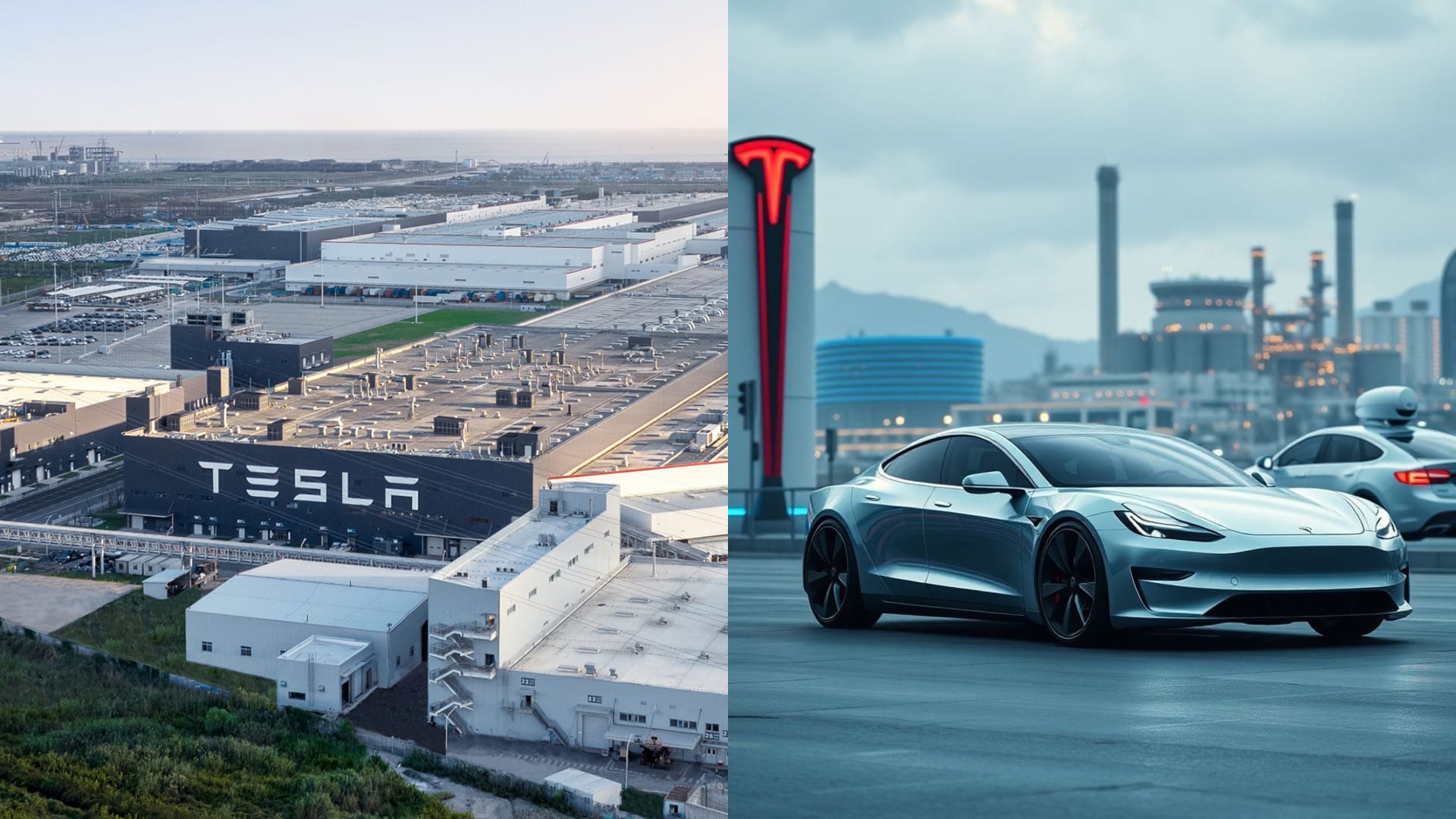


Tesla reinforces its bet on EVs with a $20 billion mega-program, including a lithium refinery, LFP battery factory, and Cybercab. Robotaxi at the center of the strategy.
Neste artigo
Tesla reinforces the path towards EVs
Contrary to some circulating rumors, Tesla is not moving away from the electric vehicle market. On the contrary, the company is reinforcing its long-term bet on EVs, with an investment plan of tectonic proportions to support the company's vision for the future of electric mobility.
A $20 billion capital program was announced to support infrastructure and production expansion: a lithium refinery in Corpus Christi, Texas, a lithium iron phosphate (LFP) battery factory in Sparks, Nevada, and the Gigafactory in Texas to begin production of the Cybercab. The lithium refinery is expected to supply the EV production chain, and the LFP factory can supply batteries for the Cybercab and other models of the brand.
These investments represent a broad bet on the trajectory the industry expects for the coming years — a vision that many manufacturers have tried to cultivate for a long time.
The role of robotaxis in the automotive ecosystem
Historically, interest in robotaxis has led automakers to invest heavily in the idea of autonomous driving services. Ford, in 2019, promised a commercial service in 2021 but backed down in 2022. General Motors only abandoned robotaxi development at the end of 2024. The logic behind this investment is clear: if electric vehicles have a lower cost per mile, it is even more advantageous to operate them as autonomous services.
US Market and Tesla's Positioning
While rivals adjust strategies for simpler, lower-cost models, Tesla maintains its focus on expanding its market share and advancing with the Cybercab within its robotaxi vision line. At the same time, the company continues to expand the price ranges of its models, with new, more accessible variants of the Model Y and Model 3, while discontinuing the luxury of the Model S and X.
Historical data indicates that Tesla's share of the North American EV market is significantly higher than that of its rivals (around 46% for Tesla versus about 13% for GM, according to the cited reference). Even so, the sector as a whole has faced strategy revisions and writedown cycles among various automakers, reinforcing the perception that the path to EVs is still under construction.
What comes next for Tesla
The central message is consistency: Tesla aims not only to sell more cars but to consolidate an electric mobility platform that includes the robotaxi ecosystem. The path may not be linear or guaranteed, but the strategy is aligned with the company's long-term mission and what many competitors have already attempted but failed to sustain.
Conclusion: Tesla continues to move forward with significant investments to strengthen its position in EVs and explore the potential of robotaxis. Meanwhile, rivals are adjusting their strategies in the face of challenging sales results; time will tell if the Cybercab will be the expected differentiator or just another chapter in a journey still under construction.
What is your take on Tesla's future: will the Cybercab take off or is the path still full of uncertainties?
Alert: Dongfeng Box gains six airbags without price increase; what changes for buyers?

Toyota bZ sales soar in the US in Q1 2026, surpassing the Chevy Equinox EV

Ioniq 5 defies expectations: sales up 14% in Q1 2026

GM maintains lead in US sales in Q1, with March boosting recovery

IONIQ 5 boosts Hyundai's record March and points to a stronger Q1

Forester Wilderness Hybrid: vegan interior, 12.3-inch digital dashboard, and orange trim