
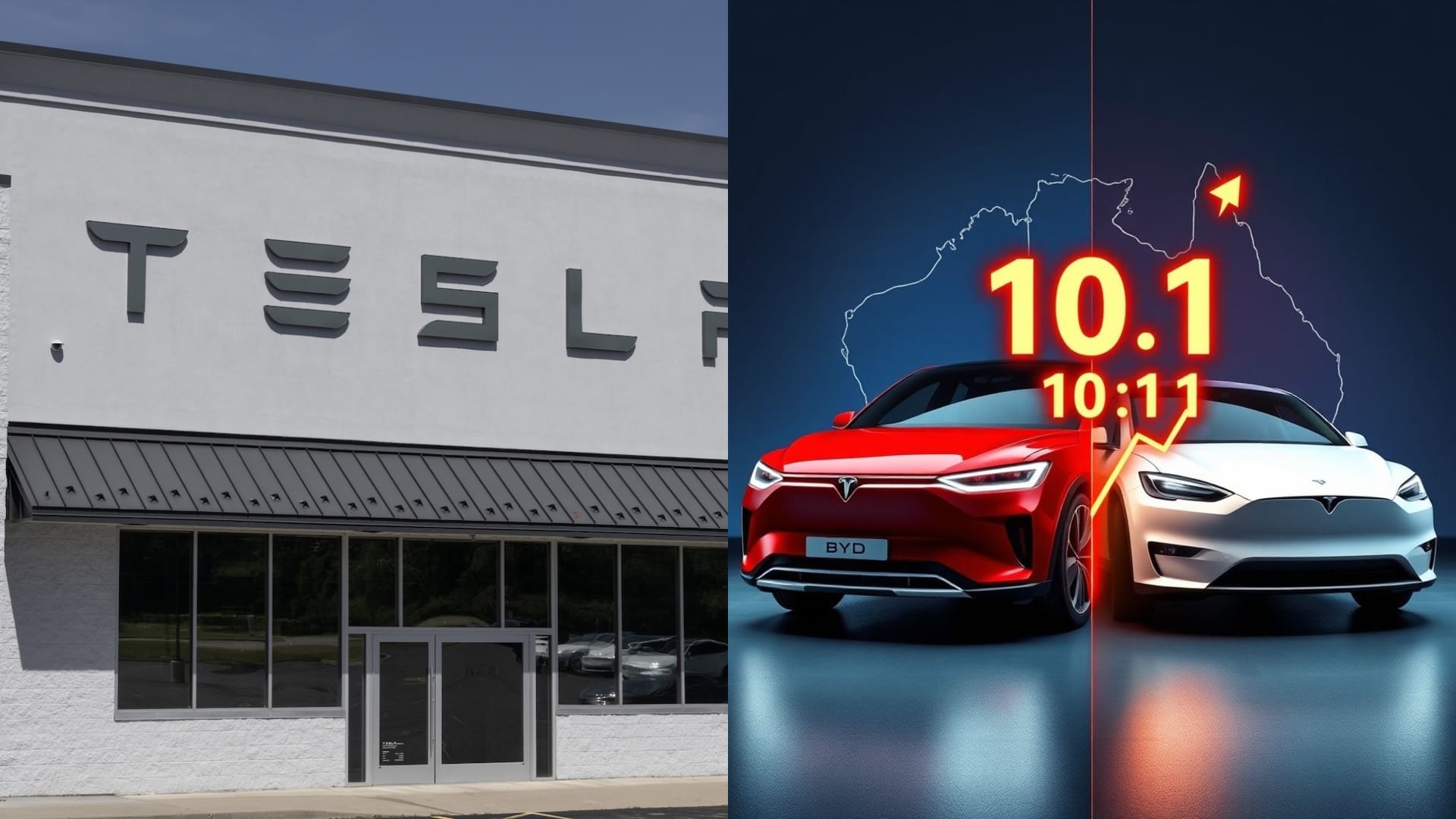


BYD surpasses Tesla 10x in January in Australia; Tesla drops 32% and BYD advances 641% YoY, as the EV market reorganizes. See how this affects you.
Neste artigo
What Happened
Data from the Australian Federal Chamber of Automotive Industries, analyzed by Electrek, shows BYD selling 10 times more than Tesla in January in Australia: 5,001 versus 501 units. Compared to January 2025, Tesla fell 32% and BYD rose 641% in the same period. These figures highlight a significant shift in the Australian EV market landscape.
Electric vehicle adoption in the country grew 93.3% last year, revealing an accelerating market. At the start of 2025, Tesla still held a slight lead, but by May, BYD's Sealion 7 was already leading EV sales in the country.
Why This Matters
CEO Elon Musk still sees Tesla as more than just electric cars, but a good portion of revenue comes from EVs, and 2025 brought challenging results. According to TechCrunch, profits fell 46% compared to the previous year.
An Electrek reader commented that with Tesla shifting focus to other areas, this type of performance tends to become more common.
Meanwhile, BYD and other Chinese manufacturers have accelerated to meet the demand for affordable EVs, with lower operating costs and environmental benefits that attract consumers considering switching vehicles.
Impact for Consumers
In markets with open competition, including Australia, there is a variety of options at affordable prices, and consumers are paying attention. BYD's strategy, according to Electrek, is to flood the market with competitive options across all segments, from the Dolphin under 30 thousand to the Sealion 7, which competes with the Model Y. Tesla's lineup in Australia remains leaner, featuring the Model 3 and Model Y.
In the US context, tariffs on vehicles produced in China make the scenario more complex, but local Tesla production supports jobs and supply chains. Analysts believe that partnerships between American and Chinese companies will grow, which could increase the availability of lower-priced EVs, even if it reduces the competitive advantage of domestic manufacturers.
In summary, the aggressive entry of Chinese manufacturers is reshaping the EV offering with more competitive prices, expanding options for consumers, while challenging local brands.
What is your take on this shift in scenario? Leave your comment below and tell us how you see the future of EVs in your country.
Alert: Dongfeng Box gains six airbags without price increase; what changes for buyers?

Toyota bZ sales soar in the US in Q1 2026, surpassing the Chevy Equinox EV

Ioniq 5 defies expectations: sales up 14% in Q1 2026

GM maintains lead in US sales in Q1, with March boosting recovery

IONIQ 5 boosts Hyundai's record March and points to a stronger Q1

Forester Wilderness Hybrid: vegan interior, 12.3-inch digital dashboard, and orange trim